
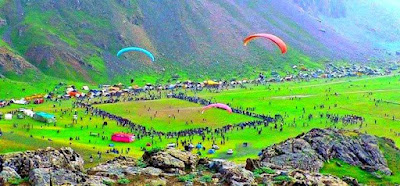

Pakistan is one of the few countries in
the world with such a diverse scenery; rivers, deserts, lakes, waterfalls,
springs, and glaciers abound, and Gilgit Baltistan fuels Pakistani tourism.
Discovering Gilgit Baltistan’s enticing charms Gilgit Baltistan has a number of
must-see attractions. As a location where the Himalayas, Karakoram, and
Hindu-Kush come together, Gilgit-Baltistan is a famous tourist destination,
surrounded by the highest and most numerous mountains in the world. The
territory is also home to uncommon plants and animals and picturesque valleys,
as well as the glittering lakes.
This region is popular among travelers
from throughout the world because of its friendly residents, heavenly scenery,
and spellbinding waterfalls. Furthermore, the province’s simplicity and harmony
are a delight for the mind and spirit. This creates an amazing contrast between
the lush green plains and the craggy mountains covered in white snow. Gilgit
Baltistan’s top seven tourist attractions have been ranked according to the
preferences of visitors.
Gupis
Valley:
Is located around 70 kilometers west of
Gilgit, along the river. the Gupis Valley in Ghizer district has some of the
most picturesque vistas and panoramic views around. A river’s turquoise water
and the farms and trees that surround it are particularly appealing to travelers.
It’s only a few miles from the Gupis Valley to Khalti Lake, a picturesque body
of water. Because of its trout fish population, it is well-known throughout the
country. The river’s bend near the town of Khalti causes the lake’s formation.
Dark blue lakes provide a dramatic flair to the picture throughout the summer
months. When the lake freezes, it’s safe to walk on. The Khalti Lake area has a
wonderful restaurant.
Hunza
Valley:
Gilgit is around a three-hour drive from
Hunza Valley. The Gilgit Baltistan region of Pakistan’s Hunza Valley is a hilly
valley. Pakistan’s Hunza Valley is located in the country’s far north. The
Hunza Valley is a spectacular valley, home to several snow-covered peaks. In
this valley, there are three distinct areas: Upper Hunza Gojal, Central Hunza,
and Lower Hunza. Hunza Valley is a popular tourist destination. Hunza Valley
attracts tourists from all over the world throughout the year, but the ideal
time to come is from May to October. Hunza Valley has a maximum temperature of
26°C in May, a low temperature of 15°C, and a maximum temperature of 10°C in October,
a minimum temperature of 0°C. Check out the Altit and Baltit Fortresses.
Skardu
Valley:
Beautiful Skardu, the centre valley of
Gilgit-Baltistan, is Pakistan’s most remote and beautiful region. Some of the
highest mountains in the world, including K2, K3, and Gasherbrum are accessible
via this valley’s numerous trails. Climbers from all around the world go to
these massive peaks every year, and a few have met tragic ends trying to reach
the top. Many streams, springs, and the warmth of the locals meet you as you
travel the seven-hour trek. In addition to the lakes Satpara and Kachura,
Skardu’s most well-known landmarks include the Shigar and Skardu Forts.
Shiger
Valley:
Shigar Valley and the Shigar River are two
of Gilgit Baltistan’s most beautiful spots. Skardu is around 170 km away. As a
gateway to the Karakoram Mountains, Shigar is a fantastic option. Shigar Fort,
Amburik Mosque, and Khilingrong Mosque are all located in the town of Shigar,
which is the valley’s major settlement. Marapi Ranga, Hashoo pi Bhag, and
Khanqah e Muallah Shigar are all variations on the same theme. Masjid al-Reema.
Shigar Valley is home to the K2 Basecamp, Astana of Syed Mir Yahya, which is a
well-known tourist destination. In the valley, there are various settlements.
Among the many fruits and nuts that grow abundantly in the valley are apricots,
cherries, pears, and walnuts. If one ventures into the valley’s tremendous cold
desert, the valley’s awe grows. The frigid desert is a distinct species unto
itself. The swaying clouds make for an incredible sight. The last stop in the
Shigar Valley before reaching the high mountains is Askole. There are several
old structures of architectural value in the town that are linked to the
Noorbakhshi Sufi community.
Astore
Valley:
located in Astore District in
Gilgit-Baltistan, Pakistan. At its eastern end, Nanga Parbat rises about 120 kilometers
above the valley. About 60 kilometers south of Gilgit, a courtyard serves as
the entry to the valley. Those who enjoy hiking and photographing nature will
find Astore to be a wonderful place to spend their vacation. Villages in the
valley include: Gudai, Shekong; Dass Karim; Loas; Chilm; Bubin; Gorikot;
Parisheng Eid Shah; Fina; Bulen; Chongra; Tari Shing; Rattu; Kamri; and Mining.
In the area, Rama Lake and its surrounding meadows are the most popular tourist
attractions. According to the season, the valley’s climate is warm in the
summer and severe in the winters. Climbing, trekking, and jeep-riding may all
be done easily from Astore Town. An area stretching from the Nanga Parbat up
via Deosai and Kamri provides considerable attraction for tourists as well as
those who seek adventure.
Nagar
Valley:
Previously known as Brushal, the district
Nagar in northern Pakistan is a veritable lakeside haven. Nagar Valley is
located at an altitude of 2,438 meters above sea level. The importance of Nagar
Khas cannot be overstated in the Nagar Valley. They have become popular tourist
attractions in the Nagar region because of the stunning landscape and awe-inspiring
vistas they provide. Hunza is located just in front of it. There are many
lovely places in Nagar, but Hooper stands out because of the ability of the
glaciers to carve out new vistas, making it even more spectacular. Diran Peak
rises above Rakaposhi Mountain in Minapin, which is encircled by Rakaposhi
Mountain. There has been an increase in tourism in Gilgit Baltistan as a result
of increased security and tourists’ desire to see a side of Pakistan that is
rarely seen in the media. In the same way as every other nation in the globe,
Pakistan is completely secure. The traveler is eager to see the country’s
natural splendors first-hand.’ There is a lot to see and do in this city. List
of Gilgit Baltistan attractions.
Khaplu
Valley:
The administrative center of
Gilgit-Ghanche Baltistan’s District, Pakistan’s Khaplu serves as the district’s
administrative hub. A historic and old town in Gilgit is located there. One of
the more accessible routes to Masherbrum Peak, located 103 kilometers east of
Skardu, is through Khaplu. This fort stood watch over the Shyok River trade
route leading to Ladakh. There are several historical sites in Khaplu,
including the exquisite Chaqchan Mosque. Roads are the only way to get to
Khaplu. Mountaineering and trekking are popular activities in Khaplu Valley,
which draws visitors from across the world due of the area’s stunning scenery.
In conclusion, these are the tourist
destination of Gilgit-Baltistan which increases the beauty and tourist ratio.